7 Mistakes Divers Make & How to Avoid Them - DAN.Org
Mark London Jul 10, 2026
7 Mistakes Divers Make & How to Avoid Them
DAN’s Smart Guide to Safe Diving
- Learn safety guidelines
- Become conscientious and responsible divers
- Prepare smarter so we can enjoy our dives
Mistake #1: Neglecting Health and Fitness

Few people enjoy perfect health for their entire lives. Adopting a healthy lifestyle early in life can help postpone ailments associated with aging.
When health issues present, it’s important to discuss them with your healthcare provider, pursue appropriate interventions and adopt modifications. With ongoing awareness of your personal health status and timely adjustments to maintain your health, diving can be a lifelong recreational activity.
Prior to diving, you should take an honest assessment of whether you are medically fit to dive. Be vigilant for signs of acute illness (like congestion) and familiarize yourself with the risks and essential precautions associated with any chronic diseases.
Acute illness that lasts more than a few days or leaves you feeling exhausted should prompt a
delay to diving.
- Do not dive when ill.
- Wait until you regain your normal strength and stamina.
- If you are not ready to exercise at your pre-illness level, you should postpone your dive.
- The best course of action is to consult with your physician.
Chronic diseases may affect your fitness to dive risks even if you perform well in other activities.
- Some health conditions, especially in advanced stages, may make the risks to you and your dive buddies unacceptably high.
- In less advanced or more stable medical conditions, divers may continue safe and enjoyable diving with proper guidance from their physician, medical controls and wise choices.
During your annual physical exam or following any changes in your health status, consult your physician to ensure you have a medical clearance to dive.
If you have questions or want to find a doctor near you who is familiar with diving medicine, email Medic@DAN.org.
Fitness
Being a physically fit diver means that you have sufficient aerobic capacity, cardiovascular health and physical strength to meet the demands of the diving environment. Can you fight a current? Perform a long surface swim? Help a buddy in an emergency? All divers need to be physically able to perform these essential tasks.
Here are some tips to help you enhance your fitness for diving:
- While diving itself can be physically demanding, it is not enough to maintain fitness overall. Divers must stay fit with additional activities outside of diving, such as swimming laps, strength training and flexibility and balance exercises.
- Regular physical activity, including aerobic activity and muscle-strengthening activity, is essential to maintain physical fitness.
- If you are over 40 and do not exercise regularly, consult your physician before you start exercising.
- Review the physical activity guidelines published by the U.S. Department of Health and Human Services on Health.gov.
- Divers should dedicate time to fin swimming. Fitness for swimming against a current includes fin-swimming skills. Divers without these skills may not be able to create sufficient propulsion to overcome a strong current even if they have high aerobic capacity for muscular work.
- At least six weeks prior to a dive trip, gradually increase the level of your physical activities.
- Join your local dive club for more specific training opportunities.
- Visit AlertDiver.com/DiveFitness to find fitness routines tailored for divers.
To avoid an increased risk of decompression sickness, DAN recommends avoiding strenuous exercise for 24 hours after diving.
Mistake #3: Insufficient Dive Planning

One of the most important predive steps is dive planning. Learn as much as possible in advance about any dive site you plan to dive.
- Before you even head out to a site, make sure to investigate currents, depths, marine life, entry and exit points, surfacing techniques, boat traffic, environmental health concerns, etc.
- Check out what surface support you may need and what local laws or regulations may apply to your planned diving activity.
- Inform someone who is not coming on your trip what your dive plan is and when you expect to be back.
- Prior to your dive, make sure you and your buddy are on the same dive plan. Discuss contingencies should conditions change during your dive. Establish the maximum depth, maximum bottom time and minimum air supply to terminate the dive.
- Review what you and your buddy would do if you were to become separated, exceed your planned dive or experience an out-of-air emergency or an equipment issue underwater. Having these discussions on the surface helps you prepare as a buddy team to manage any situations that may arise while underwater.
- Review hand signals with your buddy.
- Conduct a predive test on all of your equipment, particularly any rented gear. Use a written or mnemonic checklist to ensure you don’t overlook an essential step. Don’t skip the buddy check.
- Remember to create an emergency action plan (EAP). This essential tool that divers are taught how to construct in their advanced training courses should include what prompts an emergency response, important contact information, the nearest medical facility and the best means of getting there as well as essential first aid equipment.
- Dive planning doesn’t have to be complicated or inflexible, but it is essential to prevent and manage diving incidents.
Mistake #4: Lack of Buoyancy Control
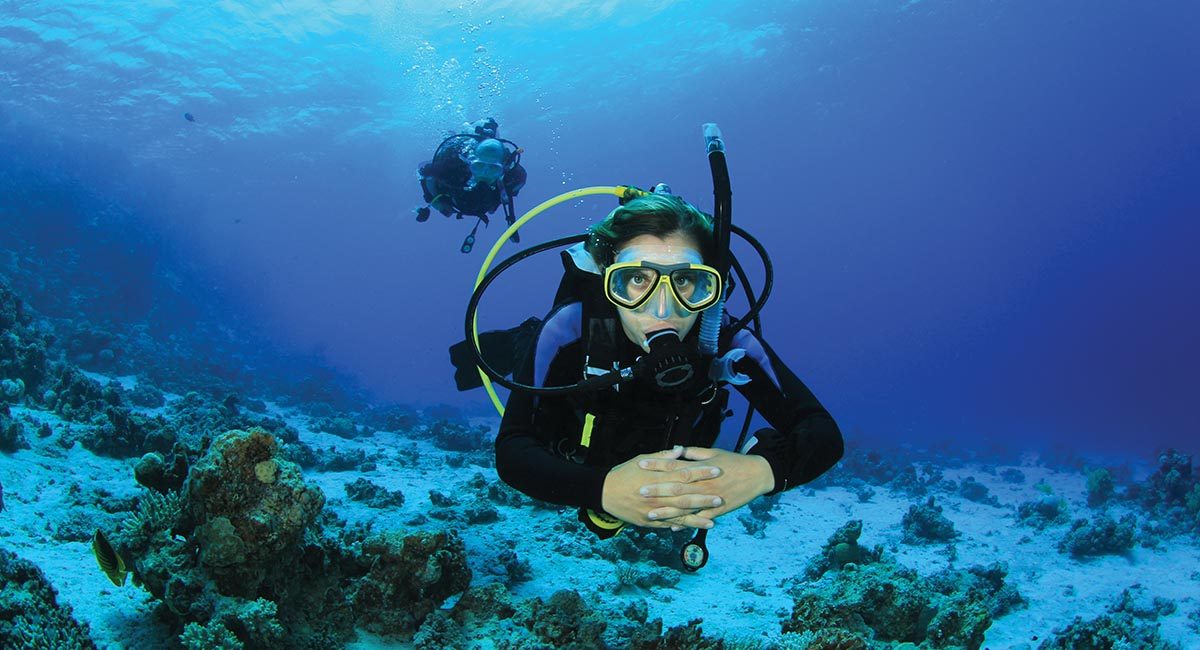
It’s not surprising that the most common injuries among divers are related to buoyancy issues—barotrauma, uncontrolled ascents, marine life injuries and more could be prevented with some practice and attention to detail.
- Inefficient buoyancy control can result in descending deeper than planned, altering the intended dive profile and potentially increasing air consumption. Constant adjustments to your buoyancy control device can also affect air consumption.
- The worst case scenario is an uncontrolled ascent, which places the diver at risk for a lung overexpansion injury (pulmonary barotrauma) and substantially increases the risk for an arterial gas embolism.
- Ear injuries are also commonly associated with ineffective buoyancy control. During descent, if you feel uncomfortable pressure in your middle ears or sinuses, you should stop your descent, ascend until the pressure resolves, attempt to equalize and, if successful, continue to descend. If you experience a reverse block on ascent, you should descend a bit and attempt to equalize. These procedures are difficult to execute without proper buoyancy control.
- Most marine life injuries result from unintentional contact between a diver and the marine life. Proper buoyancy control is essential to protect ourselves and the environment.
The physics of descending and ascending require conscious adjustment based on exposure protection, dive environment and choice of equipment.
Buoyancy Control Begins With Proper Weighting
- The amount of weight you select should allow you to descend, not make you sink. Predive buoyancy tests are a crucial tool in determining proper weighting.
- Calculating weight requirements: Different exposure suits, dive environments (saltwater vs. freshwater), and tank size and composition (steel vs. aluminum) require different amounts of weight to attain proper buoyancy.
- Your BCD is not an elevator. Be aware of how your BCD responds to the addition or venting of small amounts of air.
- And remember, buoyancy changes during the dive. On descent, your wetsuit compresses decreasing buoyancy. During the dive, as the gas in your tank is depleted, the tank becomes more buoyant. On ascent, the air in your wetsuit and BCD expands, increasing your buoyancy.
The benefits of buoyancy control are definitely worth the investment of time, maintenance, and practice to enhance your diving and to help you avoid injury.
Mistake #5: Diving Beyond Your Training
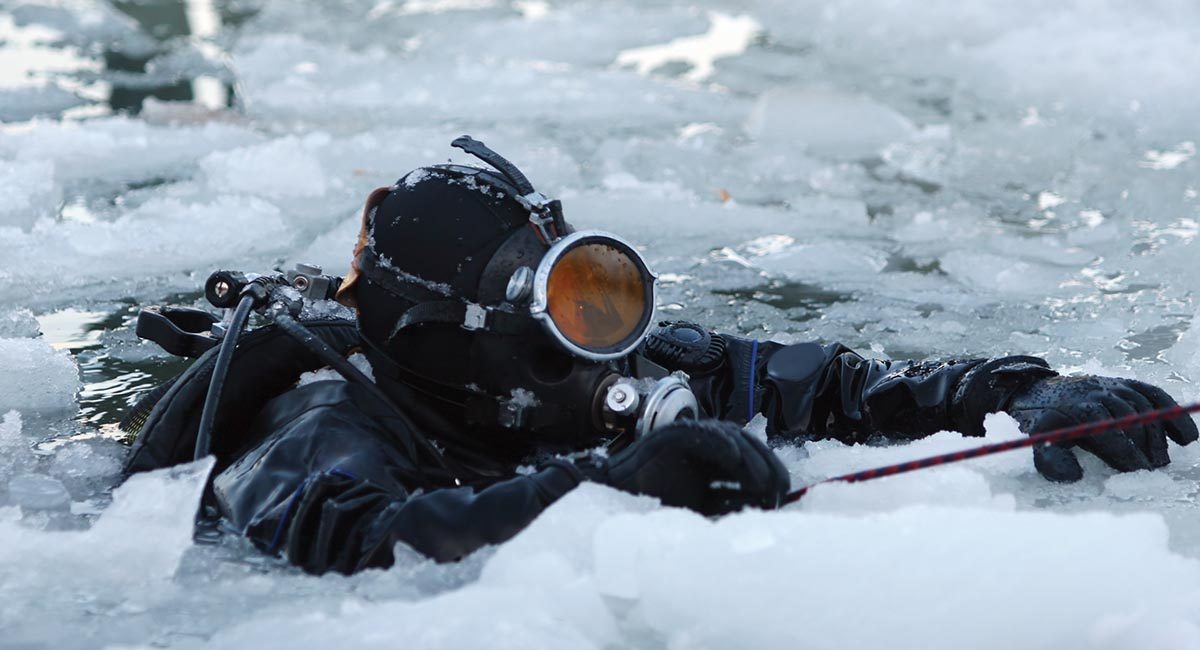
Never stop developing your diving abilities. There is always more to learn—how to dive new environments, how to refine your skills or even how to use new types of equipment. No matter where your diving adventures take you, make sure you are equipped with the proper training.
Remember:
- Your certification only qualifies you for the same diving conditions and the environment in which you were trained.
- As you continue your training, slowly extend your diving experiences. California shore diving presents different challenges than Caribbean boat diving—make sure you’re prepared for each new diving environment.
- Take it easy, and if you’re not having fun or if you don’t feel good about the dive, don’t do it. This is especially important when diving in new conditions such as cold water or limited visibility or when using new equipment.
- If you feel uncomfortable about a dive, it may because you feel that you’re not ready. Remember, dive your experience, not your “C” card.
- If you want to begin exploring new environments, seek the proper training that will prepare you to explore them safely. For instance, if you want to explore the interiors of shipwrecks or enter a cave, enroll in a Wreck Diving or Cave Diving course. These unique overhead environments present specific challenges that can be deadly if you are not trained to manage them.
Don’t neglect first aid training. In the case of an emergency, you will not regret taking a course that requires a few hours of your time.
There are all kinds of specialty dive courses that can prepare you to explore safely. If you want to expand your diving experiences, sign up for a course to get the training you need…
- wreck
- deep
- cavern
- drysuit
- cave
- ice
- drift
- altitude
- night
Mistake #6: Running Out of Air

Running out of air is the most common trigger for diving accidents. It seems like a no-brainer, but several factors can affect consumption rate. Be air aware: Monitor your air supply.
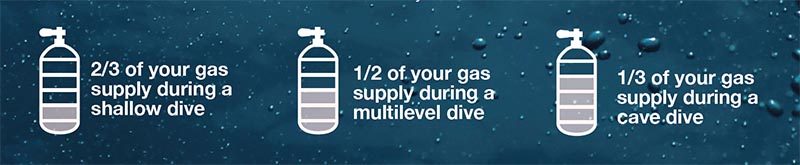
- Incorporate gas supply into your dive planning. You can only stay under as long as you have enough gas remaining for a safe ascent. Don’t forget to save some gas for flotation. Good rules of thumb for turnaround limits are when you have used:
- Check your gauge regularly.
- Be aware that exertion, like when swimming in strong currents and depth will affect your air consumption.
- Anxiety or stress can also affect air consumption. Try to maintain normal breathing, but if you do feel anxious, keep a closer eye on your gas supplies; it may dwindle more rapidly than usual.
- Running out of air is an easily avoidable mistake that carries serious repercussions.
Mistake #7: Not Taking Personal Responsibility
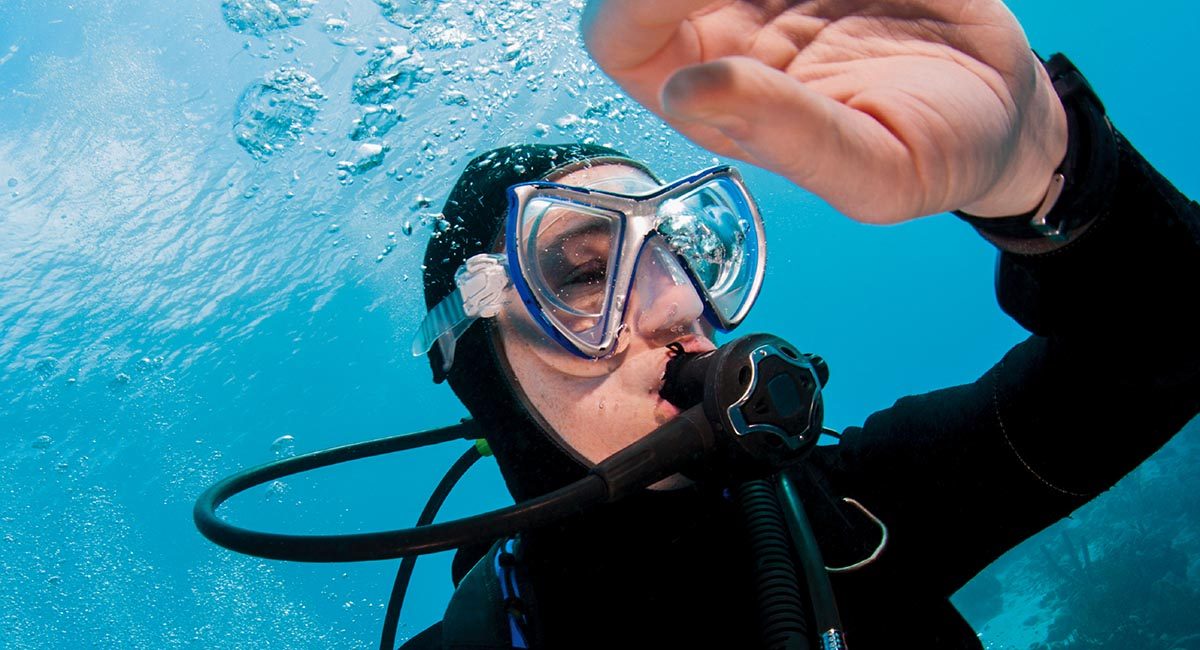
Each diver in the dive group shares equal responsibility for the conduct of the dive. When all divers understand and agree with that premise, the dive group can protect itself from individual and collective harm.
Know your personal limits and take time to examine and evaluate your dive habits.
Don’t rely on the experience of other divers in the group. As a certified diver, you are expected to recognize when elements are outside your level of training or comfort zone; it is your responsibility to acknowledge that and voice it.
Always remember, anyone can call off a dive at any time. In other words, it’s always OK to say “No.”
DIVE SAFETY STARTS WITH YOU!